Inventory and stores
Multi-plant, multi-store, bin-level stock with batch, lot, and serial tracking, cycle counts, reorder points read from real consumption, and a full movement history behind every number.
Industry Suites · Available
Inventory and people on one system, because a plant runs on both

In most plants the stores ledger and the muster roll are two different worlds, and the cost of a batch is only known weeks after it shipped. SyncBiz puts inventory, production, procurement, and the workforce on one schema: material moves and labour hours post against the same work order, so the cost of what you made today is available today, and the shift you will be short of tomorrow is visible tonight.
Multi-plant, multi-store, bin-level stock with batch, lot, and serial tracking, cycle counts, reorder points read from real consumption, and a full movement history behind every number.
Indents, RFQs, comparative statements, purchase orders, gate entry, goods receipt with quality hold, three-way matching against the invoice, and a vendor scorecard built from delivery and rejection history.
Bills of material with multi-level explosion, routings, work orders, job cards, machine and operator assignment, scrap and rework capture, and work in progress visible by stage.
Incoming, in-process, and final inspection plans, sampling rules, non-conformance reports, corrective actions, calibration schedules, and a traceable record from finished batch back to raw material lot.
Employee master, contract and permanent workforce, documents with expiry alerts, org structure, transfers, confirmations, and the full service record of every person on site.
Biometric and card punches, shift rosters, overtime rules, leave and holiday policy, statutory deductions, and payroll that closes against attendance rather than beside it.
Contractor licences, labour compliance, gate passes, induction records, permits to work, incident reporting, and a safety register that stands up to an audit.
Material, labour, and overhead posted to the same work order, so batch cost, plant efficiency, OEE, and manpower cost per unit are available while the month is still open.
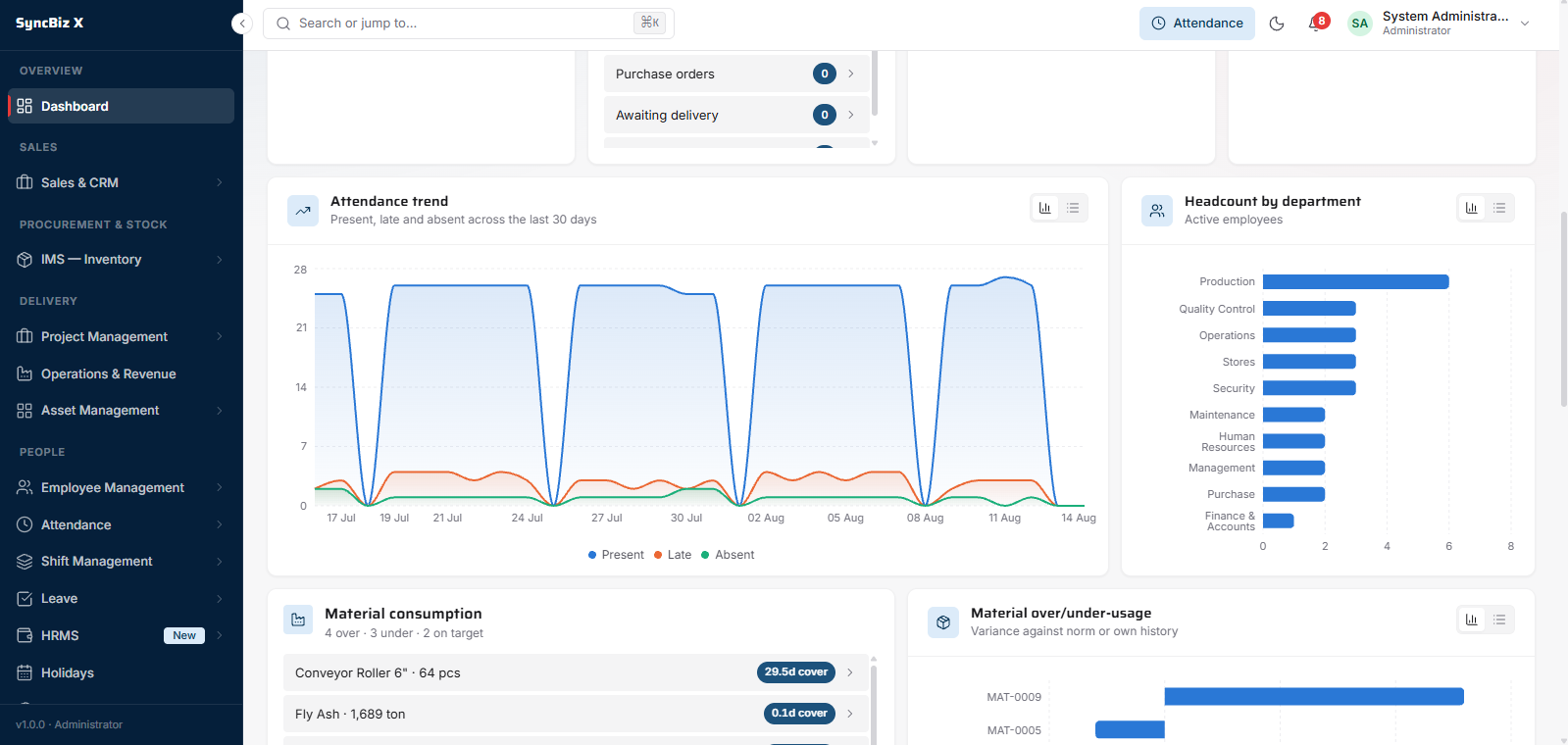
Interface previews are representative layouts. Every deployment is configured to your own modules, terminology, and branding.
Consumption history, seasonality, and the open order book produce a reorder recommendation per item, with a stated confidence interval rather than a single number.
Shift patterns, overtime load, and service history flag which operators are likely to be absent next week and which are likely to leave next quarter, while there is still time to plan.
Rejection rates read against machine, operator, shift, and material lot surface the correlation a monthly quality review would take a quarter to notice.
A constrained solver sequences work orders against machine availability, changeover cost, manpower on roll, and promised dates, and shows what each trade-off costs.
SyncBiz is built to sit inside the estate you already run. These connectors ship with the product; anything else is an integration engagement rather than a limitation.
Because the cost of what you make is material plus labour, and keeping them in separate systems means the plant only learns its true cost after the fact. SyncBiz posts both against the same work order, so batch cost is live rather than retrospective.
Yes. Stores, work orders, and workforce are scoped per plant with a consolidated group view, inter-plant transfers, and reporting that rolls up without re-keying anything.
Shop-floor capture is offline-first. Scanners, kiosks, and the Android app queue locally and sync when connectivity returns, with conflict resolution on the server.
Yes, through OPC UA and MODBUS gateways. Machine counters, downtime reasons, and process parameters post directly against the work order instead of being typed in.
It does not have to. SyncBiz is the operational system of record and posts to Tally, SAP, NetSuite, or Zoho Books through a reconciled interface. Firms without an incumbent can use the built-in ledger instead.
How it works
The path a record takes through the product, and what the system does at each step without being asked.
The order book explodes through the bill of material into a material plan and a manpower plan that are checked against each other before either is committed.
Indents become RFQs, comparatives, and purchase orders; gate entry, goods receipt, and quality hold record what actually arrived.
Work orders issue material and book labour at the same time, so cost accumulates on the shop floor rather than in the accounts department.
Inspection plans, non-conformance reports, and lot genealogy make a finished batch traceable back to a raw material lot and an operator.
Attendance closes payroll, work orders close cost, and the plant knows what it made and what it cost while the month is still open.
Send us how you run this today, including the spreadsheets. We will show you SyncBiz against your own process and tell you plainly what it would and would not change.