General ledger and multi-entity
Chart of accounts with dimensions, multiple entities and currencies, inter-company entries that eliminate on consolidation, and period locks that actually lock.
Commerce & Operations · Available
The close, the compliance, and the cash position, without the month-end scramble

Finance teams spend most of their month assembling the numbers and almost none of it interpreting them. BluLedger automates the assembly: invoices are read rather than typed, bank lines match themselves, statutory returns are prepared from the ledger rather than from a re-keyed export, and the cash position is current at any hour of any day rather than accurate once a month.
Chart of accounts with dimensions, multiple entities and currencies, inter-company entries that eliminate on consolidation, and period locks that actually lock.
Vendor invoices read from email or upload, three-way matched against purchase order and receipt, approval routing by amount and cost centre, payment runs, and a duplicate-payment check that runs before the money leaves.
Invoicing and recurring billing, credit limits, ageing, automated dunning that escalates on its own schedule, disputes tracked to resolution, and a collections forecast per customer.
Bank feeds, automatic matching with a suggested treatment for what does not match, cash position across accounts and currencies, and a rolling cash forecast.
Receipt capture from a phone, policy checks applied at submission rather than at reimbursement, mileage and per diem rules, card transaction matching, and reimbursement in the payment run.
Returns prepared from the ledger, tax deducted at source, e-invoicing and e-way bills where applicable, filing calendars with owners, and a variance report against what was filed.
Asset register with depreciation schedules, capitalisation workflow, disposals, and inventory valuation that ties to the operational system rather than being estimated.
A close checklist with owners and dependencies, schedules generated automatically, an auditor workspace with read-only evidence access, and management reporting that does not need to be rebuilt each month.
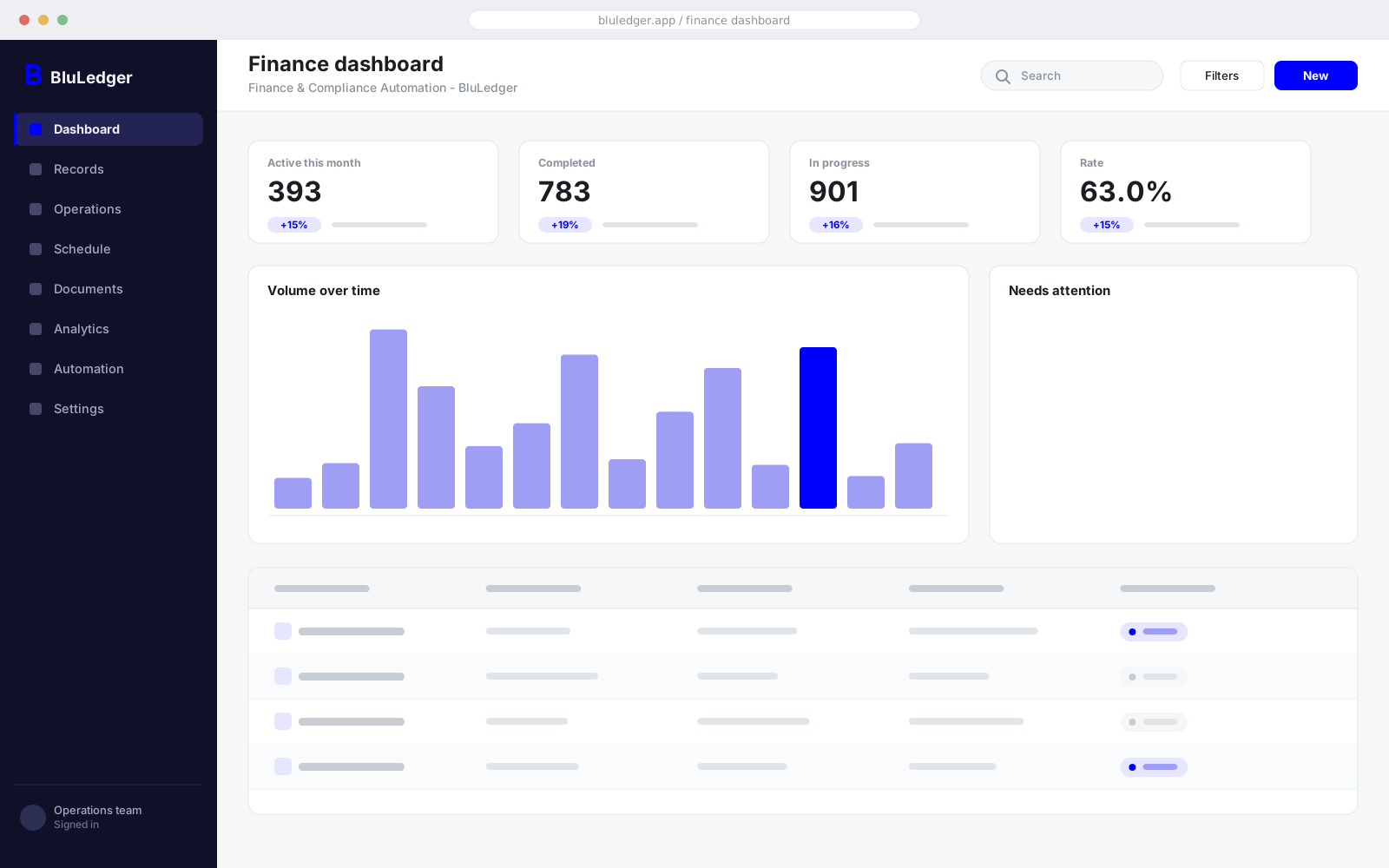
Interface previews are representative layouts. Every deployment is configured to your own modules, terminology, and branding.
Invoices, receipts, and statements are read with per-field confidence, and the fields your team corrects most are the ones the model learns first.
Duplicate invoices, vendor bank-detail changes, round-sum entries, and out-of-pattern approvals are raised before payment rather than found in an audit.
Customer payment behaviour, seasonality, and the committed pipeline produce a cash forecast with an interval, so a funding decision is made against a range rather than a guess.
Unusual balances, missing accruals, and schedules that do not tie are surfaced at the start of the close rather than discovered on the last day of it.
BluLedger is built to sit inside the estate you already run. These connectors ship with the product; anything else is an integration engagement rather than a limitation.
It can, or it can sit in front of it. Many teams keep their statutory books where they are and use BluLedger for payables, receivables, reconciliation, and reporting, posting summarised entries across. Others move the ledger itself.
Field-level accuracy is typically above ninety-five per cent on documents from vendors you receive regularly, and every field carries a confidence score. Anything below your threshold is queued for a human rather than posted silently.
Yes. Entities have their own books, currencies, and tax treatments, with inter-company entries eliminated on consolidation and a group view that does not require a separate consolidation spreadsheet.
A read-only workspace with the evidence attached to each posting, the approval trail, and the schedules, so audit requests are answered by giving access rather than by assembling a folder.
Yes. Postings are append-only, corrections are recorded as reversals rather than edits, and every change carries the actor, the timestamp, and the prior value.
How it works
The path a record takes through the product, and what the system does at each step without being asked.
Invoices, receipts, and statements arrive by email, upload, or feed and are read into structured records with a confidence score per field.
Three-way matching, bank reconciliation, and duplicate checks resolve most of the work before a person sees it.
Routing by amount, entity, and cost centre, with maker-checker on every posting and an immutable trail behind it.
Returns, e-invoicing, and withholding are prepared from the ledger on a filing calendar with named owners.
Schedules, accruals, consolidation, and reporting run against a checklist, so the close is a process rather than a scramble.
Send us how you run this today, including the spreadsheets. We will show you BluLedger against your own process and tell you plainly what it would and would not change.