Consignment and booking
Booking, consignment notes, multi-leg movements, rate contracts per client and lane, freight calculation, and a customer portal that shows where a consignment actually is.
Commerce & Operations · Available
Every vehicle, every consignment, and the true cost of both

A fleet is expensive in ways that never appear on one report: the idling that burns fuel, the trip that ran empty on the return leg, the maintenance deferred until it became a breakdown, and the driver whose hours nobody was counting. BluFleet puts consignment, vehicle, driver, route, fuel, and maintenance in one system, and reads telematics directly, so cost per kilometre and cost per consignment are facts rather than estimates.
Booking, consignment notes, multi-leg movements, rate contracts per client and lane, freight calculation, and a customer portal that shows where a consignment actually is.
Load planning against vehicle capacity and type, route sequencing with time windows, driver assignment against hours and licence validity, and re-planning when reality intervenes.
GPS and OBD data ingested continuously, live position, geofence entry and exit, halt and idling detection, harsh braking and speeding events, and route deviation alerts.
Electronic proof of delivery with signature, photograph, and geo-stamp from the driver app, exception capture for shortage or damage, and instant availability to the client.
Fuel entries against odometer and telematics, mileage anomaly detection, toll and permit costs, driver advances, trip settlement, and expense approval workflow.
Preventive maintenance schedules by distance or hours, job cards, spare parts inventory, tyre lifecycle, and document expiry tracking for insurance, permits, and fitness.
Driver master with licence and training validity, duty hours, trip history, safety scoring from telematics, incentive calculation, and a settlement statement per trip.
Freight invoicing against rate contracts, detention and demurrage, client reconciliation, and profitability per trip, per lane, per vehicle, and per client.
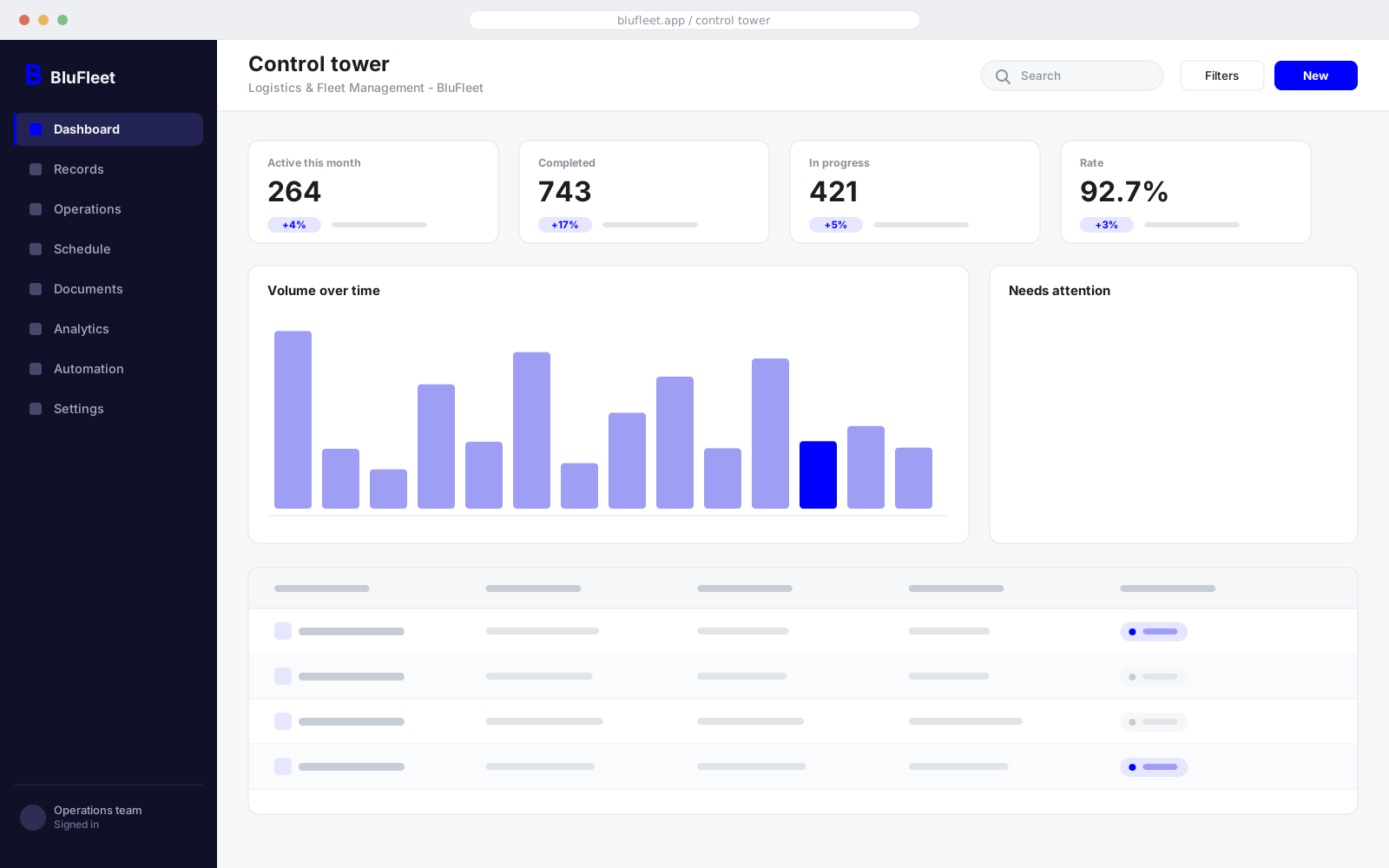
Interface previews are representative layouts. Every deployment is configured to your own modules, terminology, and branding.
A solver sequences stops against time windows, vehicle capacity, traffic history, and driver hours, and shows the cost of every constraint you asked it to respect.
Arrival estimates are recomputed continuously from live position, historic lane performance, and traffic, and the customer is told when the estimate changes rather than when it is missed.
Engine telemetry, fault codes, and service history predict which vehicle is heading for a failure, so it is booked into the workshop rather than recovered from the roadside.
Fuel entries, telematics, and driving events combine to flag pilferage, unusual idling, and unsafe driving patterns as exceptions rather than as a monthly report.
BluFleet is built to sit inside the estate you already run. These connectors ship with the product; anything else is an integration engagement rather than a limitation.
Yes. BluFleet ingests from the common GPS and OBD device families and from most telematics providers over their APIs, so hardware already fitted does not have to be replaced.
Yes. Owned, attached, and market vehicles all appear in the same dispatch plan with different cost models, and profitability is calculated correctly for each.
The driver app buffers locally and the device queues its own data. Both sync when coverage returns, so a route through a dead zone does not leave a hole in the trip record.
Yes, through a portal and tracking links. Clients see consignment status, live estimated arrival, and proof of delivery without calling your operations desk.
From actual distance travelled per telematics, actual fuel booked, driver cost, maintenance apportioned over the service interval, and fixed costs allocated per running day, so it is a measured figure rather than a budget assumption.
How it works
The path a record takes through the product, and what the system does at each step without being asked.
Consignments, rate contracts, and lanes create the commercial record before a vehicle is ever assigned.
A solver builds loads and routes against capacity, time windows, driver hours, and licence validity.
Telematics stream position, halts, and driving events, and the driver app captures every exception on the way.
Electronic proof of delivery with signature, photograph, and location reaches the client while the driver is still at the gate.
Freight, detention, fuel, expenses, and maintenance resolve into a real profit figure per trip, lane, and vehicle.
Send us how you run this today, including the spreadsheets. We will show you BluFleet against your own process and tell you plainly what it would and would not change.