Catalogue and pricing
Products, variants, bundles, attributes, and media in one catalogue, with price lists per channel, region, and customer group, plus promotion and coupon rules that do not contradict each other.
Commerce & Operations · Available
One catalogue, one stock position, every channel you sell through

Retail breaks when the channels disagree. The website sells what the store has already sold, the marketplace listing is a week behind on price, and nobody can say what a single customer is actually worth across all of it. BluCart holds one catalogue, one stock position, and one customer record, and lets the store, the site, the marketplace, and the app all read and write against them at the same time.
Products, variants, bundles, attributes, and media in one catalogue, with price lists per channel, region, and customer group, plus promotion and coupon rules that do not contradict each other.
A fast till that keeps selling when the internet does not, with barcode scanning, split tender, returns and exchanges, loyalty redemption, and shift and cash-drawer reconciliation.
Stock across stores, warehouses, and in transit, with bin locations, batch and expiry, cycle counts, transfers, and reservation logic that stops a channel selling what is already committed.
Orders from every channel in one queue, with ship-from-store, click and collect, partial fulfilment, split shipments, returns, and exchange handling.
A headless storefront with search, merchandising, cart, checkout, and payment, or an API layer in front of the storefront you already run.
Purchase orders driven by real demand, supplier price lists, goods receipt, landed cost, returns to vendor, and a supplier scorecard from delivery and quality history.
One customer record across channels, purchase history, loyalty points and tiers, segments, campaigns, and a lifetime value figure that includes returns.
Tax-compliant invoicing, credit notes, settlement reconciliation per payment provider and marketplace, margin by product and channel, and stock valuation that ties to the ledger.
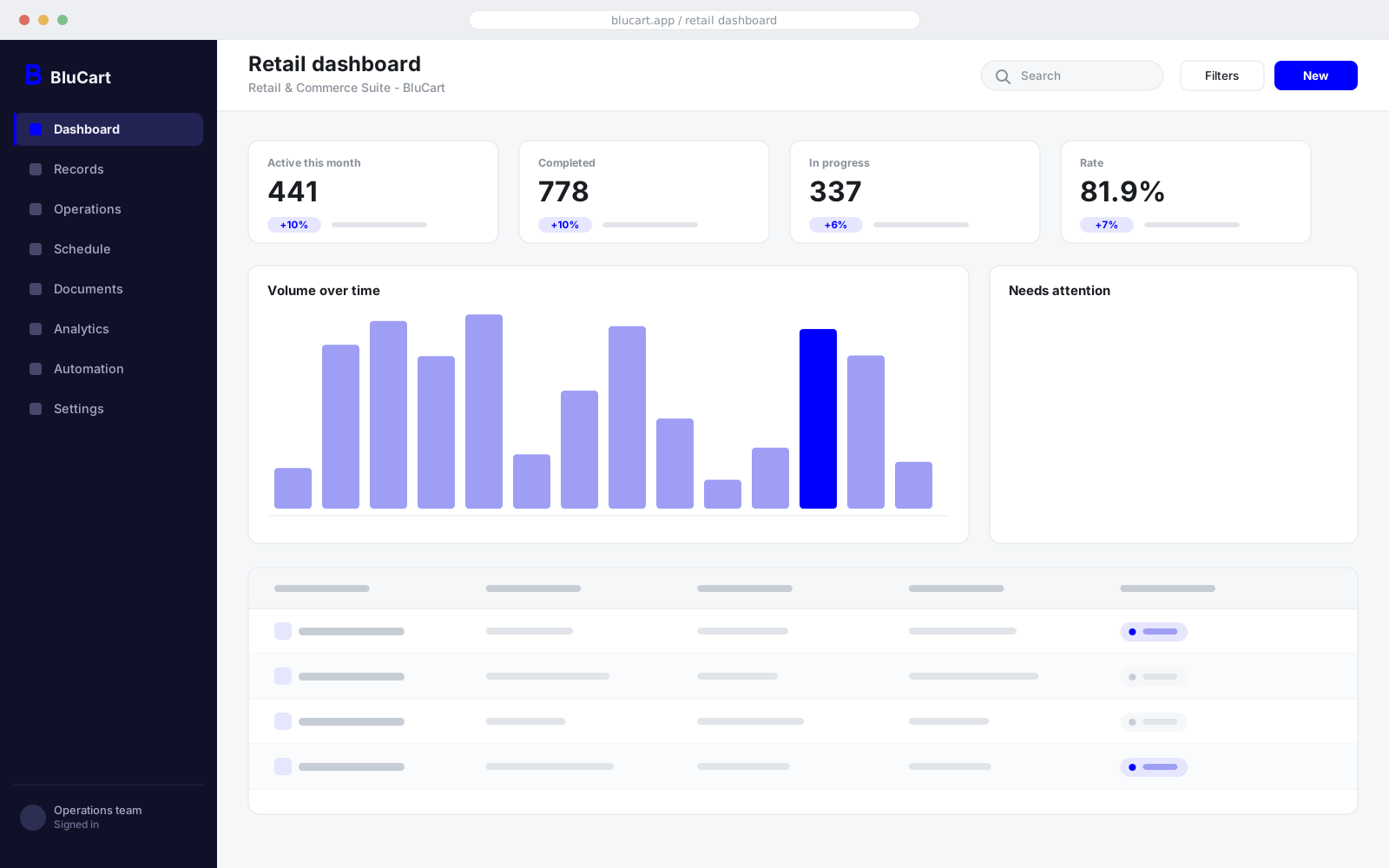
Interface previews are representative layouts. Every deployment is configured to your own modules, terminology, and branding.
Per store and per SKU forecasts drive replenishment suggestions that account for seasonality, promotion calendars, and lead time, with the uncertainty stated.
Price and markdown recommendations read from elasticity, stock age, and competitor movement, always as a suggestion inside guardrails you set.
Related and complementary product recommendations on the storefront and at the till, trained on your own basket data rather than a generic model.
Order, payment, and return patterns are scored so that genuine customers pass unimpeded and the small number of abusive patterns are held for review.
BluCart is built to sit inside the estate you already run. These connectors ship with the product; anything else is an integration engagement rather than a limitation.
Yes. BluCart can act as the catalogue, inventory, and order management layer behind a storefront you already run, or serve its own headless storefront. Most chains keep the front end and consolidate the back.
The till keeps trading. Sales, returns, and payments are recorded locally against the last known stock position and reconciled automatically on reconnect, with any conflict raised for a supervisor.
Yes. Franchise stores can have their own pricing, stock ownership, and settlement rules while sharing the master catalogue and reporting up to the brand.
Marketplace payouts, commissions, and returns are matched line by line against the orders they relate to, so the difference between what you sold and what you were paid is visible per order rather than as a monthly lump.
Yes. Customer-group price lists, credit limits, tiered quantity pricing, and purchase order driven ordering are part of the standard product.
How it works
The path a record takes through the product, and what the system does at each step without being asked.
One catalogue with variants, media, and per-channel price lists publishes to the store, the site, the app, and the marketplace at the same time.
The till, the storefront, and the marketplace all write into one order queue against one reserved stock position.
Ship from the store or the warehouse, split the shipment, or hold it for collection, with the customer told what is actually happening.
Forecasts per store and per SKU drive purchase orders and transfers, with lead time and promotion calendar built in.
Payment settlements, marketplace payouts, returns, and landed cost tie back to margin and to the ledger.
Send us how you run this today, including the spreadsheets. We will show you BluCart against your own process and tell you plainly what it would and would not change.