Talk to an engineer

Workforce & Intelligence · Available

BluMind — AI Copilot & Automation Studio

Your own models, your own data, and agents that stop where they should

  • Web console
  • REST and streaming API
  • Slack and Teams
  • SDKs
  • On-prem runtime
  • RAG
  • Model routing
  • Evaluations
  • Guardrails
  • OpenTelemetry traces
  • Fine-tuning
A row of GPU accelerators installed in a server chassis

What BluMind is

A model is not a product. What makes it one is the retrieval layer that gives it context, the evaluation harness that proves it is right, the guardrails that stop it when it is not, and the trace that lets you explain, six months later, why it did what it did. BluMind is that layer. It is the AI platform underneath every other product we ship, and it runs standalone against the systems you already have.

Modules

Knowledge and retrieval

Connectors to your document estate, databases, and applications, layout-aware parsing, chunking tuned to structure, hybrid vector and lexical retrieval with re-ranking, and permission-aware results so nobody retrieves what they cannot open.

Copilot and assistant builder

Assistants configured against a knowledge base, a tool set, and a persona, deployed to a web widget, Slack, Teams, or your own application through the API.

Agent runtime

Planner and executor loops with typed tool contracts over your internal APIs, durable run state that survives a restart, bounded retries, and human approval gates on every irreversible action.

Workflow automation

Triggers, conditions, and actions that combine deterministic steps with model steps, so the part that must be exact stays code and only the part that needs judgement calls a model.

Evaluation and testing

Golden sets, regression suites, side-by-side model comparison, scoring by rubric and by outcome, and a gate that blocks a prompt or model change from shipping if it regresses.

Guardrails and policy

Input and output filters, personal data detection and redaction before anything reaches a model, topic and tool restrictions per role, budget ceilings per run, and a refusal path that is designed rather than accidental.

Model gateway

One interface across hosted and self-hosted models, routing by cost, latency, and capability, caching, fallback, rate limiting, and a per-team spend view that finance can read.

Observability and audit

Every prompt, retrieval, tool call, and response traced with OpenTelemetry, replayable end to end, retained to policy, and searchable when somebody asks what happened on the third of March.

Inside the product

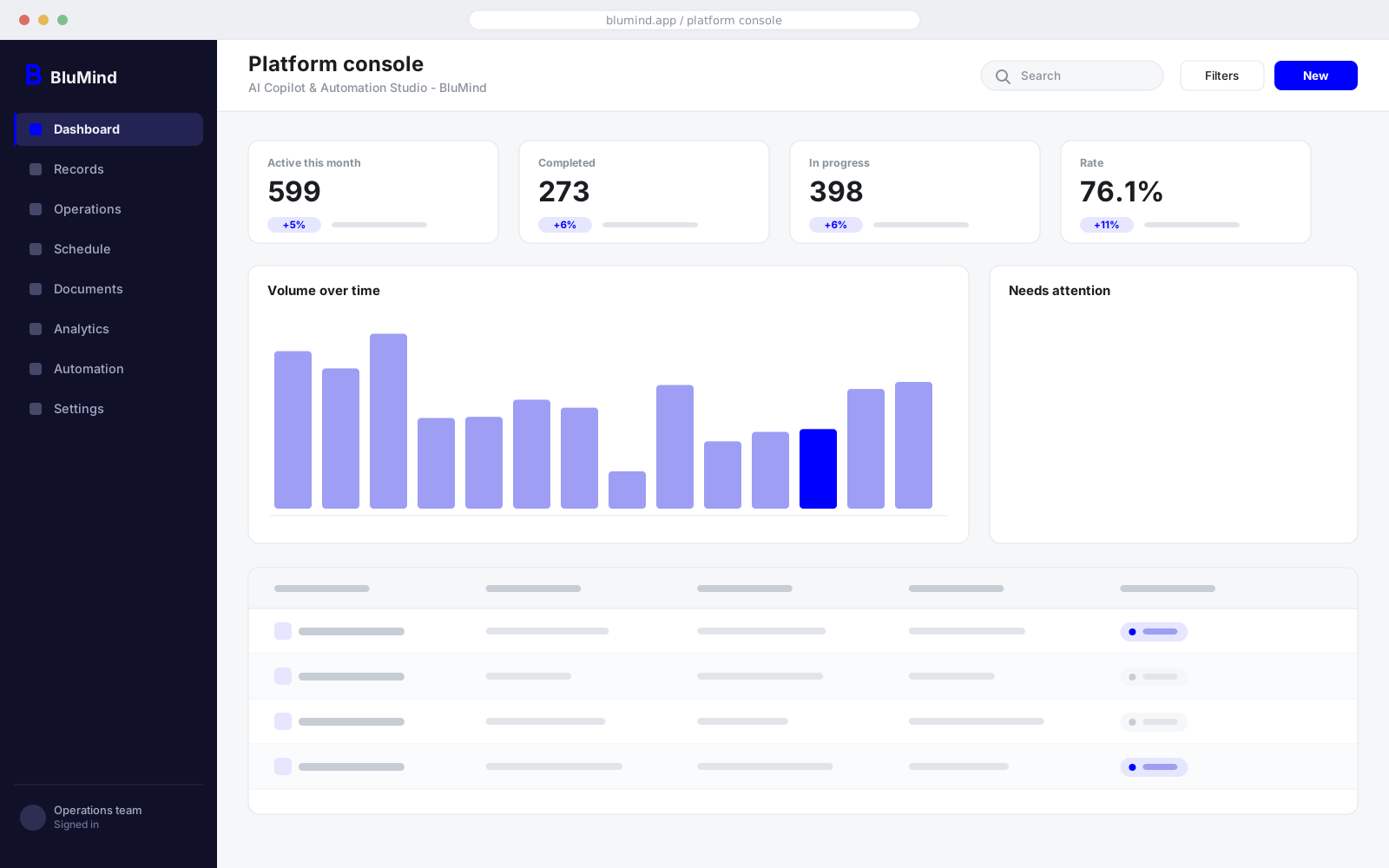
BluMind interface: Platform console
Platform consoleAssistants, agents, and workflows in production, with spend, latency, and quality per surface.
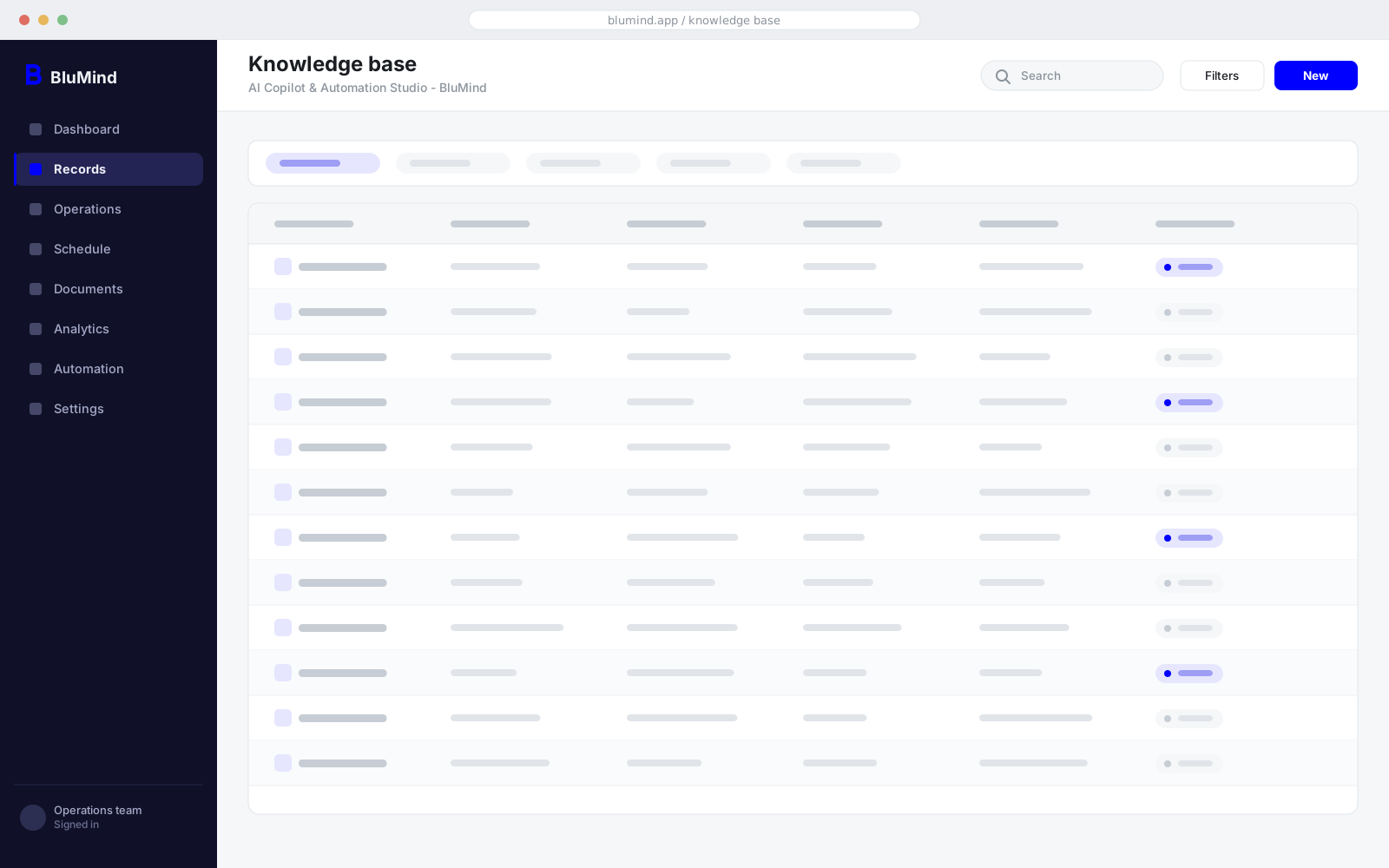
BluMind interface: Knowledge base
Knowledge baseSources, parsing quality, permission mapping, and which passages answers are grounded in.
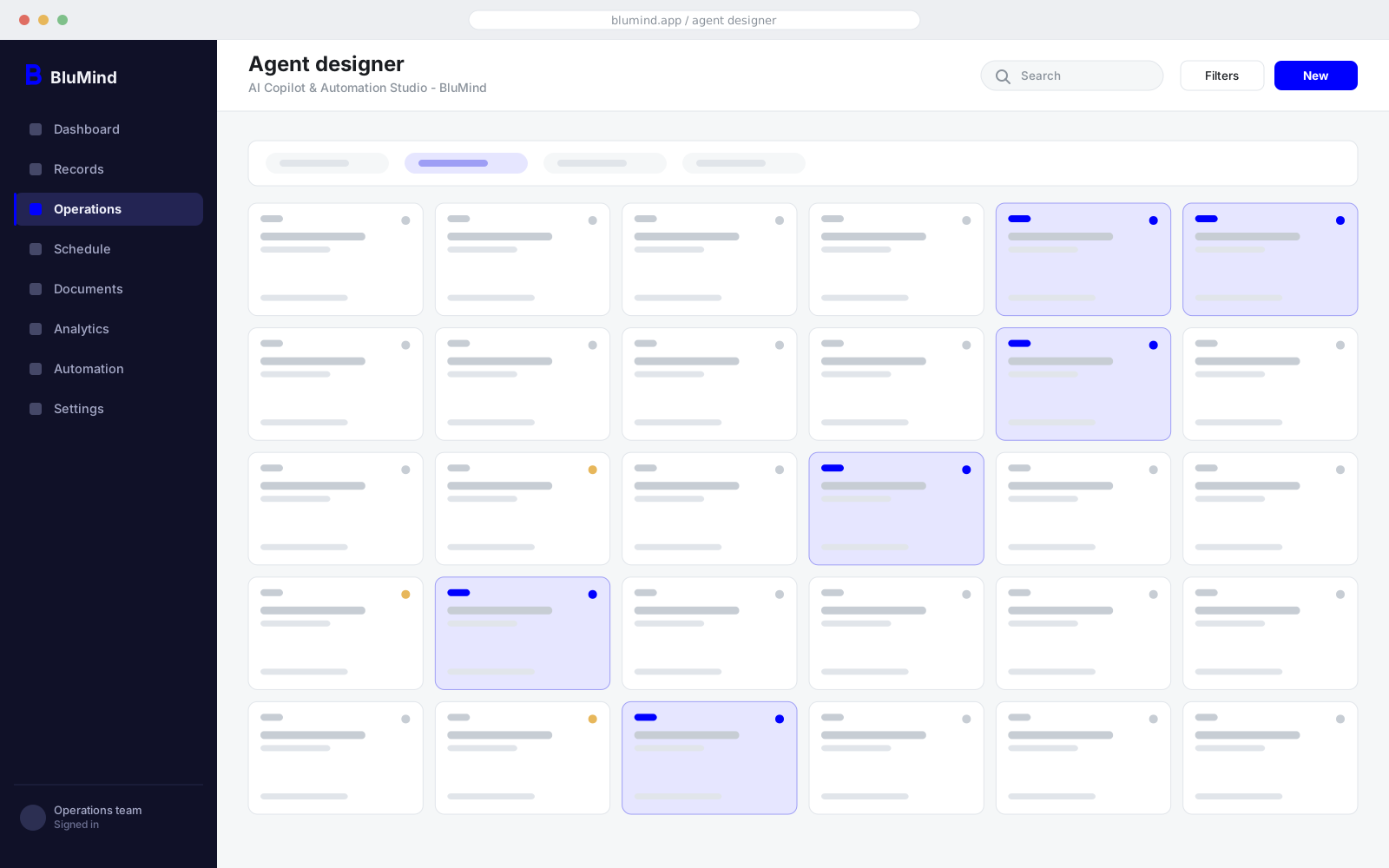
BluMind interface: Agent designer
Agent designerTyped tools, planner steps, approval gates, budgets, and the run state that survives a restart.
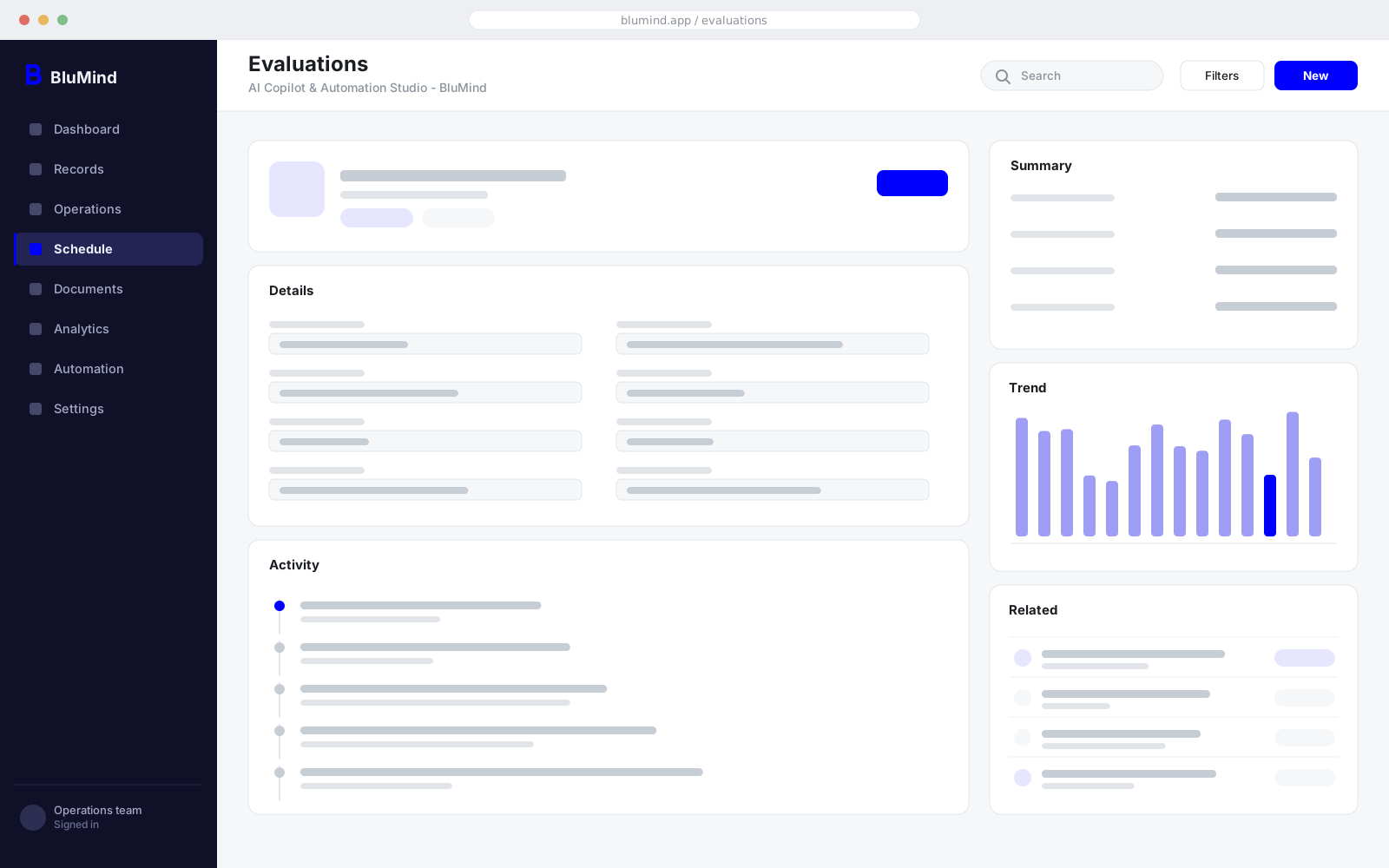
BluMind interface: Evaluations
EvaluationsGolden sets, side-by-side comparison, rubric scores, and the gate that blocks a regression.

Interface previews are representative layouts. Every deployment is configured to your own modules, terminology, and branding.

What it does for you

  • Retrieval that cites its source, and returns nothing rather than guessing when evidence is thin
  • Permission-aware knowledge, so a model never surfaces what the reader cannot open
  • Agents with typed tool contracts, durable state, and approval gates on irreversible actions
  • Evaluation suites that gate a prompt or model change before it reaches production
  • Personal data detected and redacted before it reaches a model or a log
  • A complete, replayable trace of every prompt, retrieval, tool call, and response

The AI inside BluMind

Model routing by task, not by habit

Each step is sent to the model that is actually best for it on cost, latency, and capability, with automatic fallback and a spend ceiling per team and per run.

Grounded answers with citations

Every answer is bound to the passage it came from, and the system is configured to decline rather than to improvise when the retrieved evidence does not support a claim.

Continuous evaluation

Production traffic is sampled against golden sets and rubrics, so quality regression is detected by the platform rather than reported by a user.

Fine-tuning and distillation

Where a task is narrow and high volume, we distil it into a smaller model you own and can run on your own hardware, at a fraction of the cost per call.

What it changes

100%Of model interactions traced and replayable
60%Typical cost reduction after routing and distillation
0Irreversible actions without an approval gate

Integrations

BluMind is built to sit inside the estate you already run. These connectors ship with the product; anything else is an integration engagement rather than a limitation.

  • Anthropic Claude
  • OpenAI
  • Azure OpenAI
  • AWS Bedrock
  • Open-weight models on your own GPUs
  • Postgres and pgvector
  • SharePoint and Google Drive
  • Slack and Teams
  • Snowflake and BigQuery

Questions we are asked

Do we have to send data to a third-party model provider?

No. BluMind runs against hosted models, against models in your own cloud account, or entirely on your own GPUs with open-weight models, including fully air-gapped deployments. The routing layer is the same in every case.

How do you stop an agent doing something irreversible?

Every tool carries a typed contract and a classification. Anything irreversible requires an approval gate by design, budgets are capped per run, and the whole run is traced, so an agent cannot quietly exceed its remit.

How do you measure whether the AI is any good?

With golden sets, rubrics, and outcome scoring, run as a gate on every prompt or model change and sampled continuously in production. If a change regresses quality, it does not ship.

Can BluMind work with our existing applications?

Yes. It is API-first and designed to sit over systems you already run. It is also the AI layer inside every other BluMargins product, so adopting it once benefits all of them.

What does it cost to run?

Less than a naive implementation, usually by a wide margin. Routing, caching, and distilling high-volume narrow tasks into small models you own typically take sixty per cent out of the model bill, and the console shows spend per team and per surface.

How it works

BluMind, end to end.

The path a record takes through the product, and what the system does at each step without being asked.

01

Ground

Your documents, databases, and applications become a retrieval layer that respects the permissions those systems already enforce.

02

Build

Assistants, agents, and workflows are assembled from typed tools and deterministic steps, with the model used only where judgement is needed.

03

Guard

Personal data is redacted, tools are restricted by role, budgets are capped per run, and irreversible actions wait for a person.

04

Evaluate

Golden sets and rubrics score every change before it ships, and sample production traffic after it does.

05

Operate

Routing, caching, fallback, and a full replayable trace keep the system explainable and affordable once it is in production.

Put BluMind against your own numbers.

Send us how you run this today, including the spreadsheets. We will show you BluMind against your own process and tell you plainly what it would and would not change.