Service desk and ticketing
Incidents, requests, and problems from email, chat, portal, and phone, with categorisation, priority, service level targets, escalation, and a queue view per team.
Commerce & Operations · Available
Tickets that resolve themselves, and an asset register that is actually true

Most service desks measure how fast they close tickets, not how many never needed to exist. BluDesk is built the other way round: an assistant resolves the repeatable requests at the point they are raised, the asset and licence register is discovered rather than declared, and change and incident records connect to the configuration items they actually touched, so the second outage looks familiar instead of new.
Incidents, requests, and problems from email, chat, portal, and phone, with categorisation, priority, service level targets, escalation, and a queue view per team.
A service catalogue with request forms and approval chains, a knowledge base written from resolved tickets, and an assistant that answers or fulfils before a ticket is created.
Hardware and software discovered by agent and network scan, ownership and location, warranty and lease dates, and a configuration database that maps what depends on what.
Licence entitlements against actual installation and usage, renewal calendar, unused seat detection, and a spend view per vendor and per department.
Change requests with risk classification, approval boards, scheduling against a change calendar, rollback plans, and post-implementation review that closes the loop.
Recurring incidents grouped into problems, root cause recorded once, known errors published, and knowledge articles that are actually linked from the tickets they resolve.
Joiner, mover, and leaver workflows that provision and revoke accounts, hardware, and licences through the identity provider, with evidence retained.
Service level attainment, first-contact resolution, backlog age, deflection rate, cost per ticket, and the top ten causes eating the team.
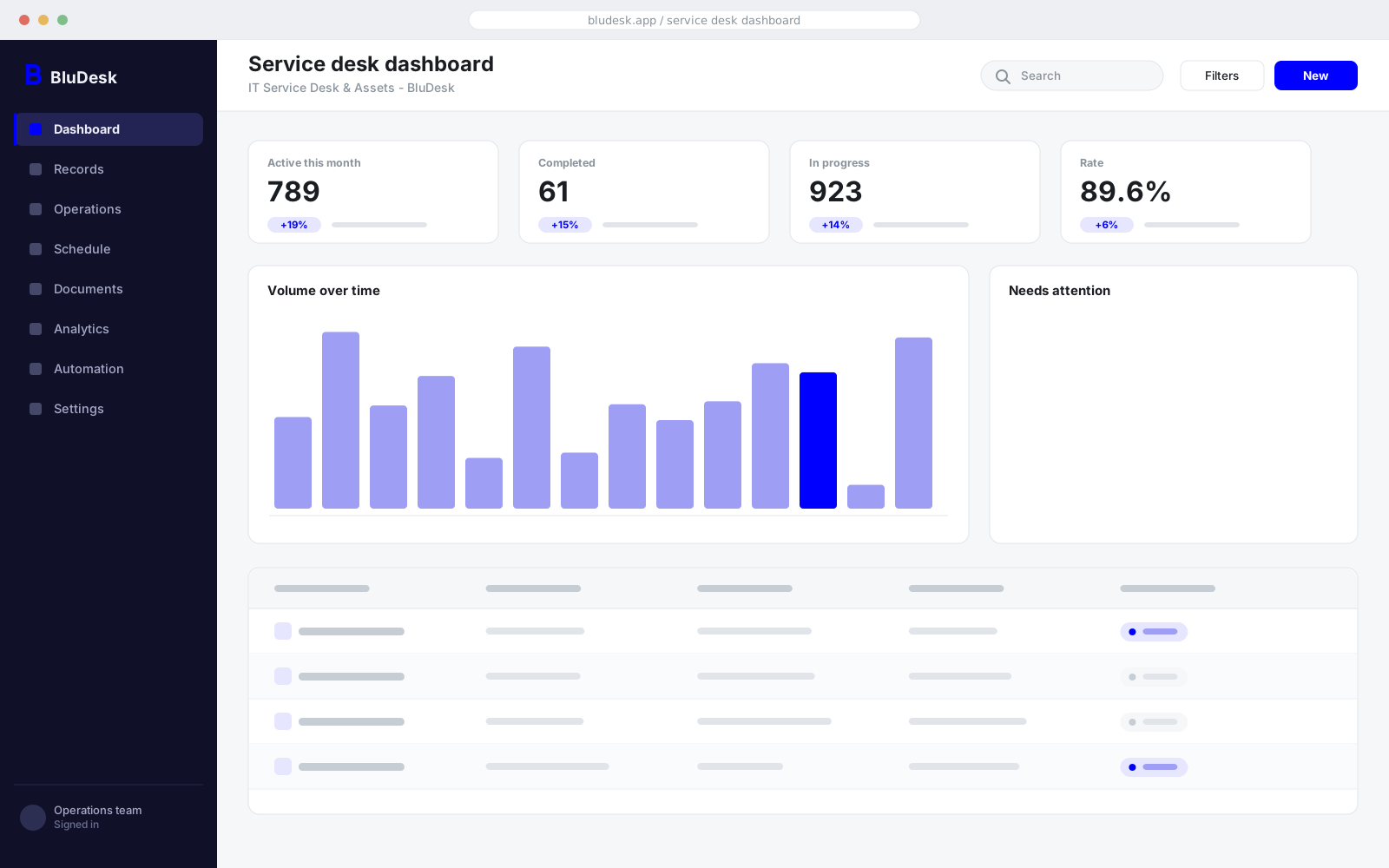
Interface previews are representative layouts. Every deployment is configured to your own modules, terminology, and branding.
An assistant grounded in your own knowledge base, past resolutions, and the requester's actual device answers or fulfils the request before it becomes a ticket.
Incoming tickets are categorised, prioritised, and routed on the basis of text, requester, and affected configuration item, with the reasoning shown to the agent.
The agent opens a ticket and sees the three closest past resolutions, the change that went in last night, and the configuration items involved.
A burst of superficially unrelated tickets is correlated against recent changes and infrastructure signals, so a major incident is declared in minutes rather than after an hour of triage.
BluDesk is built to sit inside the estate you already run. These connectors ship with the product; anything else is an integration engagement rather than a limitation.
It is ITIL-aligned across incident, request, problem, change, and configuration management, without forcing a small team to adopt processes it does not need. Modules are enabled as your practice matures.
A lightweight agent on managed devices plus network scanning and integrations with Intune, Jamf, and your identity provider build the register continuously, so it reflects what is actually deployed rather than what was recorded at purchase.
Yes. It is grounded in your knowledge base, your resolved tickets, and the requester's own device and access context, and it cites what it read. Where it is not confident, it creates a ticket rather than guessing.
Yes. Client tenancies are isolated with their own catalogues, service level targets, and reporting, under one operational console for the provider.
Yes. Alerts from Datadog, Grafana, and similar tools raise or enrich incidents automatically and are correlated with recent changes for major-incident detection.
How it works
The path a record takes through the product, and what the system does at each step without being asked.
A request arrives from chat, email, or the portal, and an assistant grounded in your own knowledge tries to resolve it before a ticket exists.
What remains is categorised, prioritised, and routed against the configuration item it affects, with the reasoning shown.
The agent sees the closest past resolutions and last night's changes alongside the ticket, not in a separate tool.
Fixes that require a change go through classification, approval, scheduling, and a rollback plan that is written before the work.
Recurring incidents become problems, root causes are recorded once, and the knowledge base is written from resolutions rather than from intentions.
Send us how you run this today, including the spreadsheets. We will show you BluDesk against your own process and tell you plainly what it would and would not change.