Tender and estimation
Bill of quantities, rate analysis, resource-loaded estimates, vendor quotations, margin modelling, and a bid history you can query the next time a similar package comes up.
Industry Suites · Available
One system from tender to handover, and a schedule that tells the truth

A construction project is a distributed system with almost no telemetry. The schedule lives in one tool, the budget in another, procurement in a third, and the site itself reports once a week in a meeting where everyone is already defending a number. BluCrete puts the tender, the budget, the programme, the material, the labour, the subcontractor, and the bill in one system, reconciles them against each other nightly, and reads site photographs to check what was actually built against what was claimed.
Bill of quantities, rate analysis, resource-loaded estimates, vendor quotations, margin modelling, and a bid history you can query the next time a similar package comes up.
The winning estimate becomes the budget. Committed, incurred, and forecast cost are tracked per BOQ line, with variance raised the week it happens rather than at the end of the quarter.
Activity-level programme with dependencies, critical path, baseline against actual, resource histograms, and delay analysis that identifies which slip actually threatens handover.
Site indents, purchase orders against the budget line, delivery challans, goods receipt, site stores with issue and consumption, reconciled against theoretical consumption from the BOQ.
Daily progress reports from the field app with geo-tagged photographs, manpower and plant deployed, weather, work fronts open, and hindrances logged against the party responsible.
Work orders, running account bills, retention and deduction rules, labour attendance through biometric or face capture, contractor compliance, and safety induction records.
Checklists per activity, pour cards, test results, non-conformance reports, permits to work, an incident register, and a snag list that closes with photographic evidence.
Client RA bills from measured quantities, deviation statements, escalation clauses, certification workflow, retention release, and a receivables position that is current.
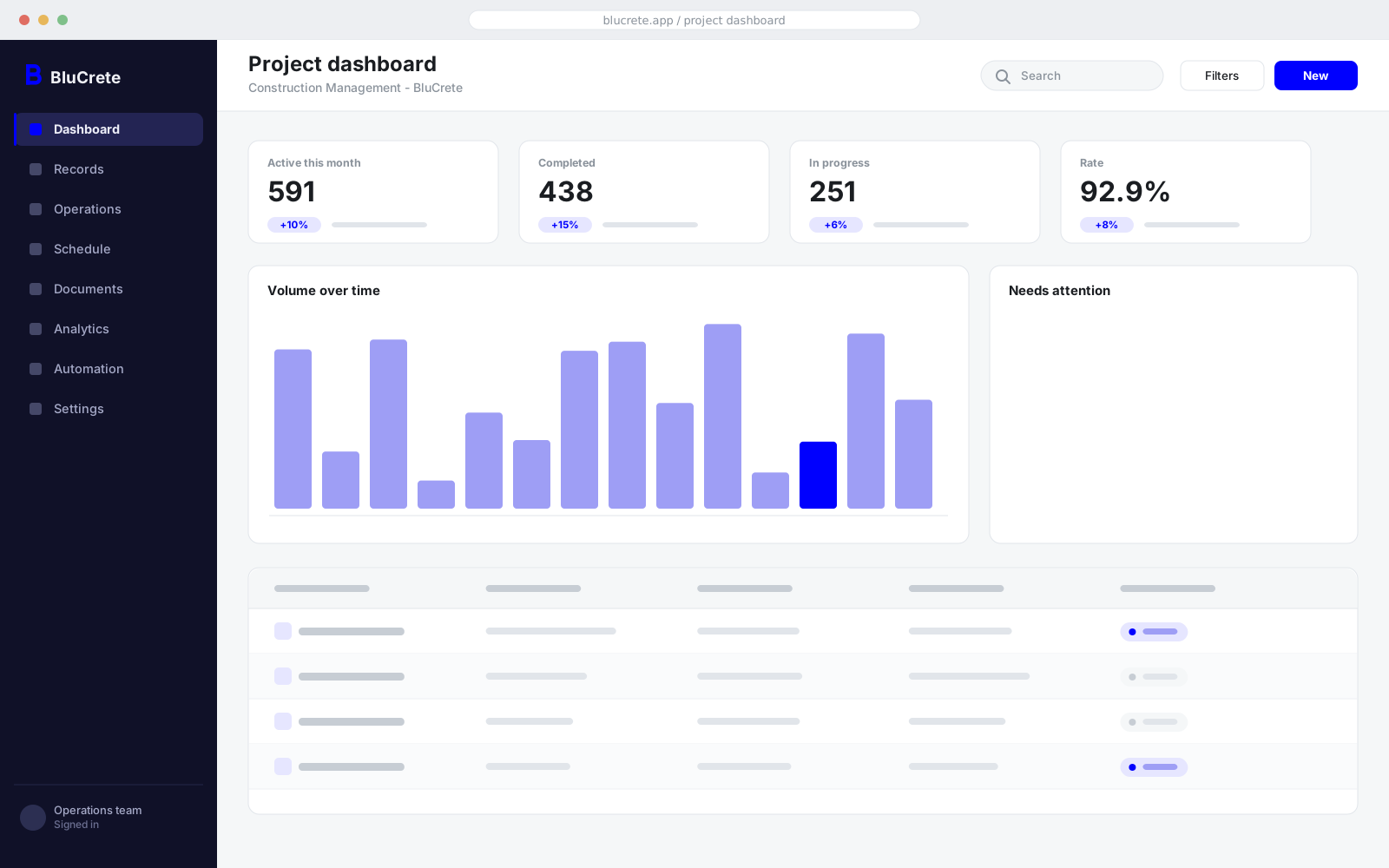
Interface previews are representative layouts. Every deployment is configured to your own modules, terminology, and branding.
Vision models compare geo-tagged site imagery against the programme and flag where claimed progress and visible progress disagree, before it becomes a certification dispute.
Historic productivity, current manpower, weather, and open fronts produce a probabilistic completion date with an interval, rather than a plan that assumes nothing goes wrong.
Ask a question in plain language and get the answer from the current revision of the drawing or the clause in the contract, with the page cited and superseded revisions marked.
Actual consumption read against theoretical consumption per BOQ line surfaces the pour, the store, or the vendor where the leakage is happening.
BluCrete is built to sit inside the estate you already run. These connectors ship with the product; anything else is an integration engagement rather than a limitation.
It does not have to. BluCrete reads and writes both, so planners can keep working in the tool they know while the programme stays reconciled with the budget, the site, and the bill. Firms without an incumbent planner use the built-in scheduler.
The field app captures geo-tagged, time-stamped imagery against a work front. Vision models compare it with the activity claimed complete and raise an exception where they disagree. A person always makes the final call; the model only decides what is worth looking at.
Yes. The field app is offline-first: daily reports, measurements, photographs, and attendance are captured locally and sync when the device finds a network, with conflicts resolved on the server.
Yes. Projects, joint ventures, and special purpose vehicles are separate books with their own approval chains, consolidated at group level, with shared vendor and rate masters where you want them shared.
RA bill formats, deviation statements, and measurement sheets are configurable per contract, including government and public works formats, escalation clauses, and price variation formulae.
How it works
The path a record takes through the product, and what the system does at each step without being asked.
Bill of quantities, rate analysis, and vendor quotations produce an estimate with the margin modelled and the assumptions written down.
The winning estimate becomes the budget and the programme, and every later number is measured against it rather than against last month.
Site capture, indents, stores, and subcontractor work orders record what was actually done, with photographs and a location attached.
Claimed progress, measured quantities, consumed material, and site imagery are checked against each other nightly, and disagreement is raised as an exception.
RA bills, deviation statements, retention, and release run on measured quantities through a certification workflow with a full audit trail.
Send us how you run this today, including the spreadsheets. We will show you BluCrete against your own process and tell you plainly what it would and would not change.